Thursday, May 24, 2018

JKS Nationals 2018


The JKS National Championship of 2018, held in Johannesburg, was a huge success with the overall level of competing showing an all time best, especially in the elite divisions. This was the general statement from our organisers, officials, athletes and spectators alike. JKS South Africa is closer to the world standard than ever before.

Numerous work sessions were held for the referees and judges leading up to the JKS National Championship to ensure knowledge and like-mindedness on the rules and recent changes of the rules. An informal competition was held in Pretoria prior to the National Championship to familiarize the referees, judges and table officials with a new tournament recording software. The N Pro Tournament Software was implemented to allow for smoother proceedings than any of our previous tournaments. We would like to extend a big thank you to Jacques Pretorius Sensei, who took the initiative with the software and devoted himself to managing it. The value of the informal competition was also noticeable in the level of competitor skills, especially with the lower grades. JKS South Africa is planning on having several more of these competitions for the improvement of both competitor and official.

The Shihankai and Kyoshikai worked closely together in the planning and execution of the proceedings. Parents and other volunteers fulfilled the much needed roles of managing warm-up areas, getting competitors ready for each bout and generally short-handed tasks. Almost all floors found themselves ahead of schedule. With the new software the results were immediately published to a screen on each floor and to the central database as the day progressed. The final results were available as soon as the last division ended.

The Senior Ladies and Senior Men Kata and Kumite divisions showed an enormous improvement in standard with exciting final rounds in all these divisions. The highlight of the tournament was the final round of the Senior Male Kata division between the upcoming Rickus Weihmann (2017 Kata Champion) and Ian Booyens, past JKS Grand Champion. Spectators gasped in awe when Ian Booyens clinched to the title once more with an ever rising jump in Unsu, landing with perfect positioning and finishing with style. He narrowly beat Rickus Weihmann's skillfully executed Gangaku and high Yoko Geri.

For the first time in JKS South Africa's history we had brother and sister combinations as Grand Champions of 2018 in the senior finals - Meghan Smit and Ian Booyens as well as Minet Uys and Jaco Uys. Meghan took gold for kata and kumite, Minet took silver for kata and kumite, Ian took gold for kata and kumite and Jaco took silver for kumite.
More photos on Bethlehem Karate Facebook Page, thank you Kosie Weihmann for the amazing shots.

Monday, December 4, 2017

Norman Robinson Shihan awarded 9th Dan

At a private function held in Port Elizabeth early September in 2017 Shuseki Shihan Kagawa Masao announced by the authority of the Japan Karate Shoto Federation that Norman Robinson Shihan was promoted to 9th Dan. At the International Seminar at the Japan Honbu Dojo on 1 December 2017 Norman Robinson Shihan was awarded with the certificate of his promotion. JKS South Africa is honoured to congratulate him on this well deserved award.

Monday, October 16, 2017

Kagawa Shihan South African Tour 2017, getting personal with the legend

Copy of DSC_1732-1.jpg

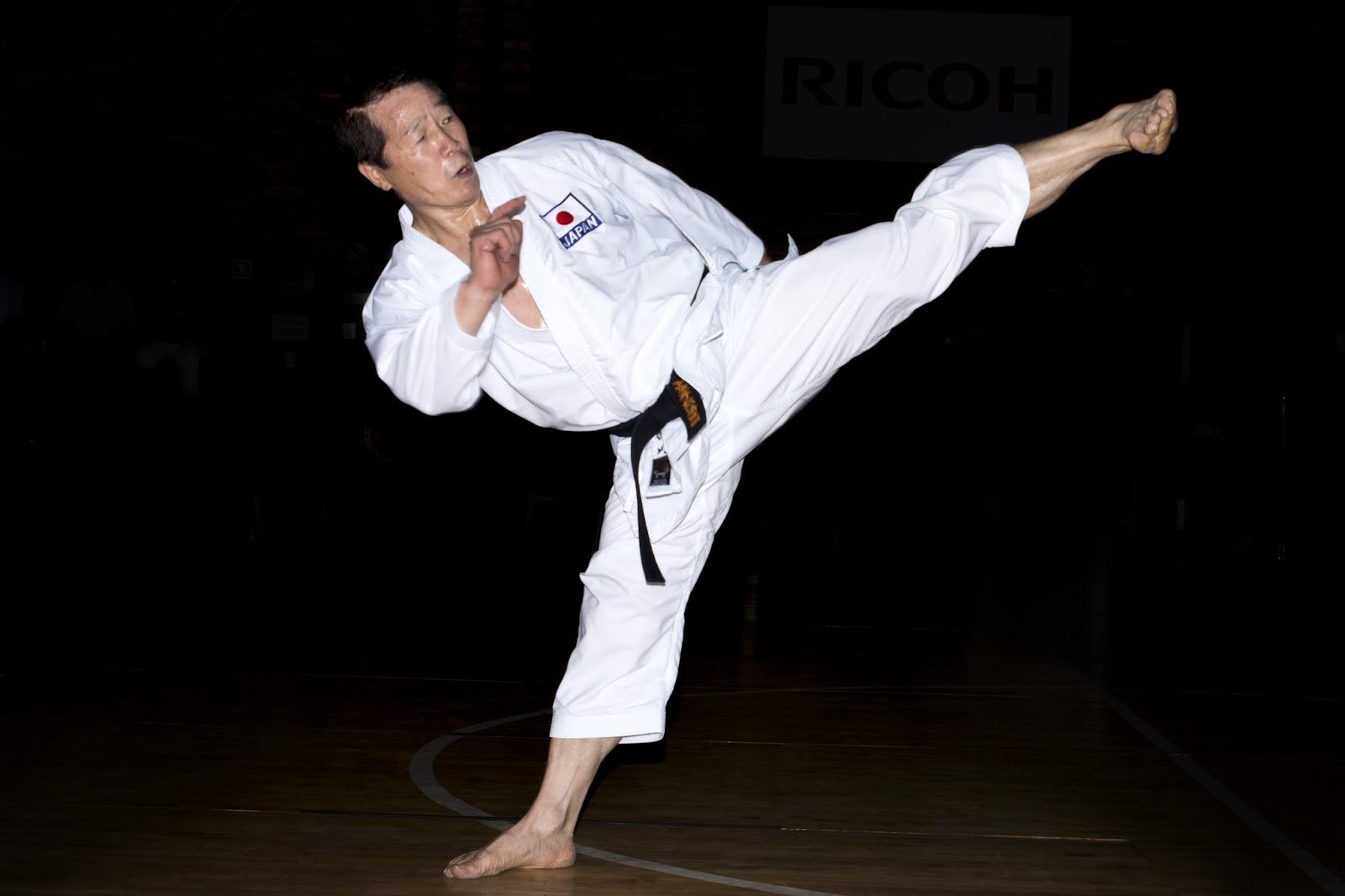
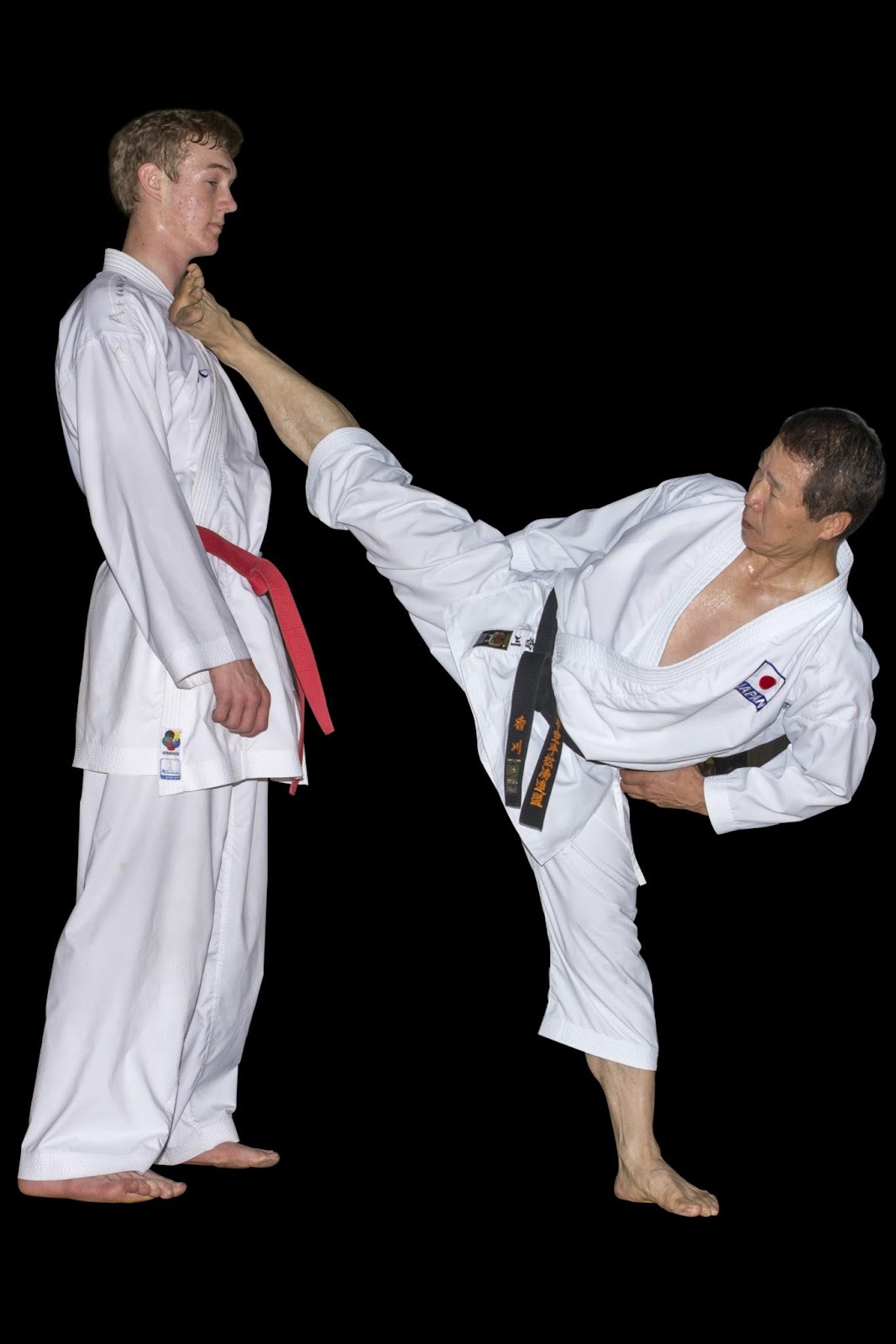
Kagawa Shihan demonstrating the yoko geri, Pretoria

Kagawa Masao Shuseki Shihan of the JKS Honbu Dojo in Japan and former technical director of the World Karate Federation visited four cities in South Africa in September this year. Karateka of all styles and nearly all corners of the country gathered to learn from the best. His knowledge is in great demand throughout the world of all karate styles, this is evident in his busy traveling schedule. He is a living legend and it was a true honour to have him in South Africa. Andre Kok Shihan shares the details of the tour, the focus of his classes and some insights to the karate world beyond what we know.

The purpose of the tour was to grant first hand exposure to South African karateka of all styles in order to boost the overall level of karate.


A tale of four cities

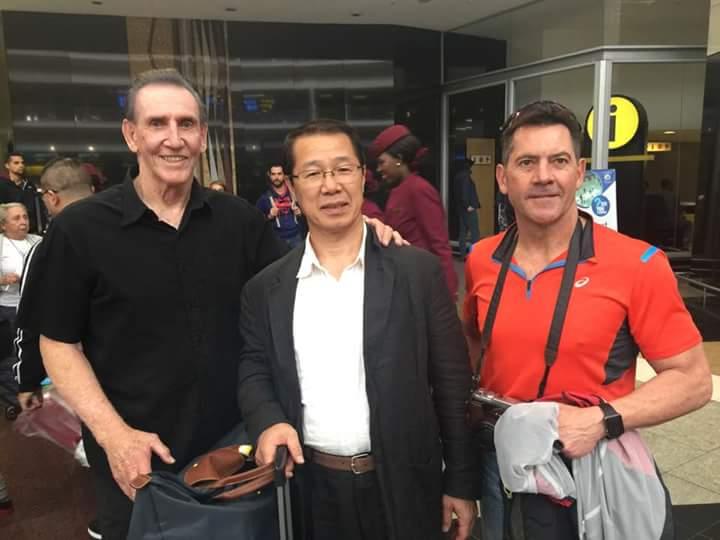
On Tuesday 05 September 2017 Kagawa Shihan arrived in Johannesburg Airport and was met by Norman Robinson Shihan and Andre Kok Shihan who accompanied him on his tour. He was treated to an afternoon at the shooting range, which he thoroughly enjoyed. Before this visit he only enjoyed clay pigeon shooting in Scotland. Later that evening it was a delight to treat him to a proper South African steak before the tour started.

Kagawa 2017 Jhb OR.jpg

Kagawa Shihan arrives at OR Tambo Int Airport

FB_IMG_1507820107501.jpg

Kagawa Shihan at the shooting range

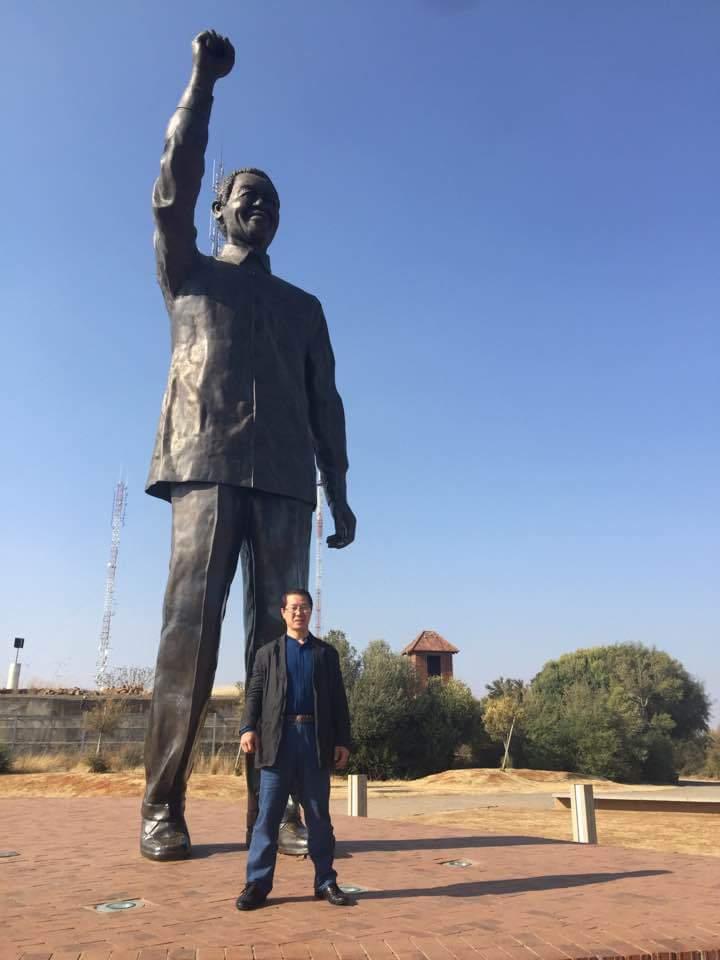
Port Elizabeth was first on the list. The classes on Wednesday were well attended and enjoyed by all. On Thursday they flew to Bloemfontein. A highlight for Kagawa Shihan was visiting the Statue of President Nelson Mandela on Naval Hill. It was memorable seeing two of our great leaders side by side.On Friday KSA president, Hanshi Sonny Pillay of SKISA welcomed and escorted them to the Durban Dojo. The students enjoyed the class very much.

Training in Port Elizabeth

Kagawa 2017 Bfn Naval Hill.jpg

Kagawa Shihan at the statue of Nelson Mandela

Kagawa 2017 Bloem5.jpg

Yoko geri demonstration in Bloemfontein

Yoko geri demonstration in Durban

The big highlight of the tour for Kagawa Shihan was Saturday’s classes in Pretoria. Besides the great attendance by karateka, legends of karate in South Africa also attended including Malcolm Dorfmann Shihan of KWF, a former KSA president Cass Sehloho Shihan, Nigel Jackson Shihan of SKSA and Soon Pretorius of JSKA. To some it has been decades since they last saw Kagawa Shihan. Malcolm Dorfman, Norman Robinson, Nigel Jackson and Kagawa Shihan shared many years of sweat, blood and tears at the “Hornet’s Nest”, the JKA Honbu Dojo or Hoitsugan in Japan in the 70’s and 80’s. Kagawa Shihan was thrilled at the reunion.

On Sunday evening Arnold de Beer Shihan of the International Shorei Martial Arts Academy celebrated his 50th year in karate in the Gujo Ryu Style. Norman Robinson Shihan, his wife Sally, Andre Kok Shihan, Lourencia Kok Shihan and Kagawa Shihan were guests of honour at this prestigious celebration. The host handed each of the Shihan a plaque of honour for their dedication to the growth of karate in South Africa.

The tour ended with an exciting Sunday visit to the Krugersdorp Rhino and Lion Park. Kagawa Shihan was very impressed with the enormous size of especially the buffalo and rhino. He was in absolute awe of our wildlife. He loved being in our nature and is particularly fond of dogs. He enjoyed playing with Quentin Kyoshi’s Bulldog puppy in Bloemfontein. Kagawa Shihan has a deep respect towards people and a great love for animals, a typical and wonderful characteristic of the Japanese culture.


“Lift your legs”

Kagawa Shihan’s training philosophy is “step by step by step”. Start at the basics and build up to the next level, step by step. The overall focus of the classes was “strong legs make a strong karateka”. The driving force of karate lies within the strength of the legs. He further stressed the importance of not only speed, but timing as well.

In the junior classes he taught mostly that the basis of karate starts with the different stances. Proper stances will lead the way to improved techniques. To the Japanese this was and is still very important. During Kagawa Shihan’s earlier training, Asai Shihan experimented with techniques to improve stances by implementing neko ashi dachi (cat stance) when he formulated the Junro Kata series and many of the “Asai kata” that is still practised all over the world today. The original idea of the” Asai kata” was to improve many of the Shotokan stances and techniques that was not practised in the traditional 26 Kata of Shotokan.

Training in Port Elizabeth

In the senior classes he started his lessons with different stance training - stepping and movement exercises to strengthen the legs. He built upon these exercises adding kicking and different hand techniques. The force in a strike starts as the legs drive into the ground through the hips to the target. With strong legs and proper hip movement the upper as well as lower body techniques will continually improve.

Copy of DSC_1742-1.tif

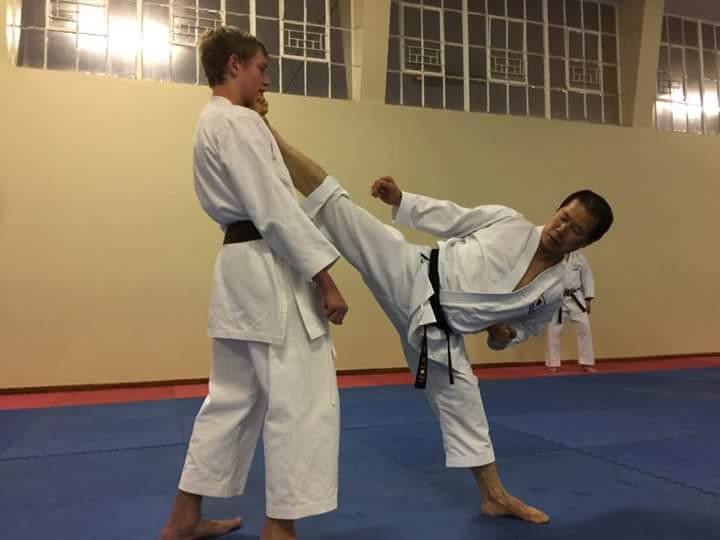
Franco du Plessis, the tallest karateka

Kagawa Shihan lifted many eyebrows with his high kicks to the tallest attending karateka in each region. Franco du Plessis, with a height just short of 2 m was the tallest karateka he met on this tour. As Franco approached, Kagawa Shihan uttered a slight gasp of surprise. But with no effort, he placed toe to chin with his mae geri and toe to ear with his mawashi geri. The karateka loved it. The amazing physical ability of Kagawa Shihan at age 62 stunned and motivated us all. He radiates an energy and enthusiasm that is undeniable and contagious. As he starts a class, he almost effortlessly sets the passion of people on fire.


The legend

Kagawa Masao Shuseki Shihan started karate at age 17 after seeing his brother win the JKA All Japan Championships at the Nippon Budokan of Japan. He recalled that he didn’t know what karate was until he saw his brother win that tournament. That was his trigger and he enthusiastically started training karate the very next day.

His brother was his first teacher and he trained with him until he went to further his studies at Teikyo University. Under the guidance of Abe Sensei, he continued to grow in karate. He completed his studies at Teikyo University and then enrolled in the Kenshusei programme at the JKA Headquarters Japan.

When asked about his training as a kenshusei (learner instructor) at the Honbu dojo he told how karate training at the Honbu Dojo was always very, very tough and he placed emphasis on the fact that karate training in those years was never easy. The term “Hornets’ Nest” was given to the JKA Honbu Dojo by South African Pioneers in karate; Norman Robinson, Stan Schmidt, Eddie Dorey, Nigel Jackson, Ken Whitstock, Robert Ferriere, Malcolm Dorfman. Here in South Africa they entertained their own juniors with stories about their excursions with the Japanese and their training in the infamous “Hornets’ nest”.

Kagawa Shihan trained with Nakayama Shihan, the former head of JKA.  Although Nakayama Shihan taught once a week at the instructor class, Kagawa Shihan was mostly taught by Asai Shihan and some of the other seniors like Tanaka, Ueki and Abe Sensei’s. Interestingly whenever Nakayama Shihan presented classes, he never actually spoke to Kagawa Shihan personally. Kagawa Shihan found it strange that all his senpai was generally corrected or motivated by Nakayama Shihan, yet he can only remember once how he was corrected by Nakayama Shihan on his “Hikite”, and only by mere gesture. Although this attitude would surprise and confuse us South Africans, Kagawa Shihan went on with the conversation as if that was perfectly fine and that it was just how it was. This is an example of the difference between South African and Japanese culture.

After questioning Kagawa Shihan about his reference to Abe Sensei, Yano Sensei, Tanaka Sensei etc. as his Senpai he took some time to explain the expressions “Senpai”, “Kohai” and “Dohai”. In the Kenshusei system of the Honbu Dojo anyone who started or completed the programme before you would be your “Senpai” and you would be his junior or “Kohai”. If someone started the programme more or less the same time with you, you would call each other “Dohai”.

When asked how he managed to acquire his great karate skill he said it is very important to always look closely at others and see how they do techniques. Our biggest assets in learning karate are the eyes because you can closely study how to properly perform a technique before attempting to do it yourself.

Leg training in Pretoria


Leg training in Port Elizabeth

When asked about his incredible kicking ability he said he wasn’t born supple. When he was young he realised he should work hard on strengthening his legs and kicking ability. He would always stay longer after classes to work on his kicking and suppleness. Through years of flexibility training and forcing his joints to loosen more, he eventually reached a very high level of suppleness and strength that we see today. Andre Shihan asked him whether he suffered from any joint pain or injuries sustained through all the years of intense training. With a big smile on his face, he answered: “Of course Andre! Every day pain, always pain, when training very hard one must feel pain”. He also admitted that he doesn’t have any physical problems and is lucky to never have suffered any serious injury.

With the 2020 Olympics coming up and karate being an official Olympic Sport, Kagawa Shihan expressed his enthusiasm and excitement saying many people in Japan see karate differently now and are looking forward to karate being showcased during the Olympics. The fact that Japan can also do very well in 2020 has more athletes training more seriously with the hope of being included in the Japanese team for 2020.


What karate is really about

A misconception is that sport karate features as a high priority in Kagawa Shihan’s teaching, but he advocates traditional karate first, competition or sport karate second. He teaches karate as an art and lifestyle above all else.

He went on by saying his team at Teikyo University always start their training with kihon, kata and basic forms of kumite. This kind of training strengthens the mind and also the body. In Japan karate is typically practised at school and University level. Competition karate usually lasts a limited time for his students. It tends to lose priority when they finish their studies and start their careers. Some athletes are very good in competition karate, but they are just that. According to Kagawa Shihan the difference between a karate athlete and a traditional karateka lies in the heart. The traditional karateka doesn’t retire, but tends to stay in the lifestyle of regular karate training.

On many occasions Kagawa Shihan complimented the South African hospitality and our love for braai and socialising around a fire. It was a perfect time of the year to visit South Africa just as spring came into bloom. South Africa is grateful to the organisers of the tour and Kagawa Shihan who inspired us with his amazing knowledge and ability.

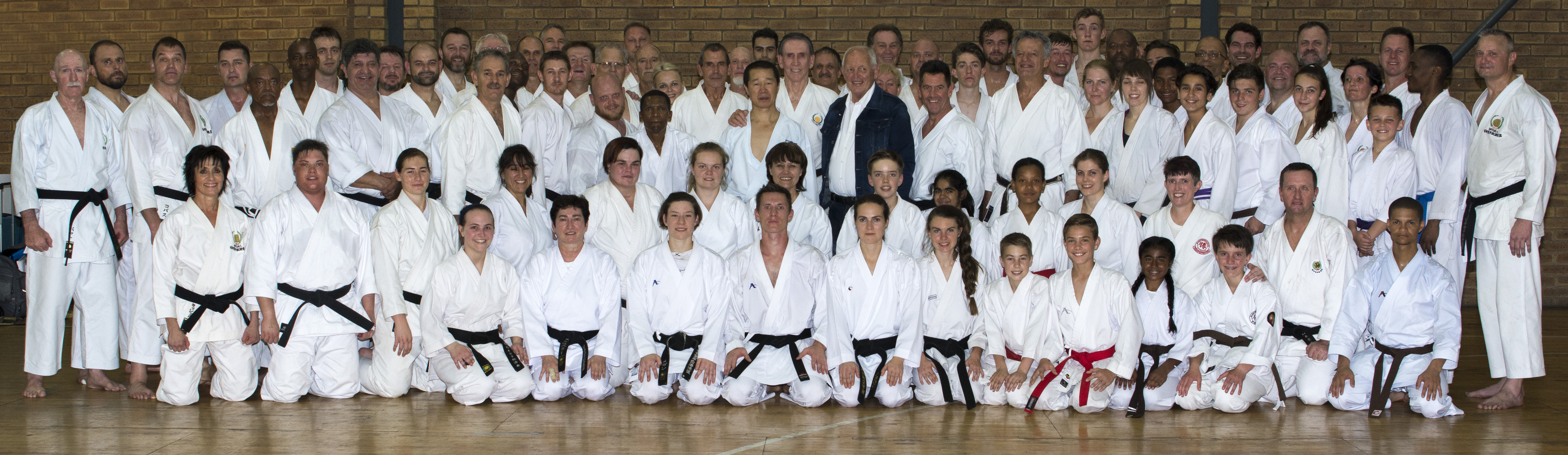
Group photo taken in Pretoria along with some of the great legends of SA karate

Wednesday, August 2, 2017

Thursday, February 9, 2017

Annual JKS Seminar January 2017

The Annual JKS South Africa Seminar was held on 21 January 2017 in Pretoria with a fantastic turnout. This year the emphasis was placed on doing karate with your whole body, correct movement and placing of feet in stances. Technical aspects in different kata were again highlighted and improvement of speed in training combinations was explained. The positive attitude and enthusiasm of all participants was also a highlight of this years seminar. The Shihankai South Africa would like to wish all instructors and members the best for achieving their goals during 2017.

The day was kicked off with a warmup session led by Sensei Jolene Booyens, with focus on especially loosening up the hips. Shihan Norman led a session on foot position and hip rotation using the first 5 moves of Heian Shodan. A lot of time was spent on kata Chinte and Meikyo by Shihan Andre and Shihan Lourencia Kok respectively. The two kata were technically examined. Many questions and discussions came from the interactive group of karateka. Many techniques were reestablished and common misconceptions put to rest. The very aim of the seminar is for the practice of the style to be as uniform as possible throughout the country and for the information to be shared fresh from the annual World Seminar held in the Honbu Dojo in Japan.

After a quick water brake, the kyoshikai had the opportunity to teach kihon, kumite and kata classes. The group was divided into three smaller groups for kihon, kata  and kumite classes. Sensei Jan Badenhorst led the kihon class, Sensei Filip Houndalas led the kata class and Sensei Kobus Prinsloo the kumite class. The rest of the Kyoshikai provided assistance during the 20 minute sessions. Knowing that time was short, the sensei did very well in conveying specific concepts to the karateka in a concise manner and in each case advised on things to practice at home to improve theses concepts. There was positive feedback on being taught by different Sensei with different perspectives.

Shihan Andre and Shihan Lourencia went through some points in the Sandan syllabus adn then continued to demonstrate foot, knee and hip positions in stances including kiba dachi, sanchin dachi, hangetsu dachi and soshin dachi. The day was not long enough but the spirit and thirst for information of the karateka was electric. Shihan Andre discussed some key points in the Tekki kata series with the help of Sensei Ian Booyens.

The seminar was concluded with a practical course in refereeing and judging with the new WKF competition rules as of 2017. Sensei Godfriend Kotze led the session giving as many karate the chance to practice each role. This was also a very interactive experience. The seminar was a great success. Karateka left with new energy and anticipation for the year to come.

We would like to thank everyone involved in making the day a success. Thank you to Shihan Norman, Andre and Lourencia, the kyoshikai and all who went to Japan for first-hand experience and knowledge and then coming back and sharing it here in order to bring the level of JKS karate closer to that of the Japanese, the origin of our karate.


Thank you Kosie Weimann and his team for the photos. More photos of the Seminar can be seen on the Bethlehem Karate Facebook page.

Saturday, January 7, 2017

Prosperous Wishes for 2017 and News from the JKS Chief Instructor

Dear JKS Dojo Heads


Warm Christmas wishes from our house to your house. Joy resounds in the hearts of those who believe in the miracle of Christmas. Wishing you all the peace, joy, and love of the season.May the Season be bright and the year ahead turn out to be just right. With warmest wishes for Good Health and  Happiness. Christmas commemorates the birth of the son of God, Jesus Christ and truly, the world becomes a delightful place on the day. It sweeps the magic wand and the snowy outdoors and joyous indoors fills the heart of one and all. Let us share Christmas gifts ideas or suggestions to one another. To our enemy, forgiveness. To an opponent, tolerance. To a friend, our heart. To a customer, service. To all, charity. To every child, a good example. To ourselves, respect.

Have a wonderful Xmas and a prosperous New Year
From:  The JKS Shihankai

Norman Shihan would like to congratulate both Andre Shihan and Lourencia Sensei on their wonderful achievements in 2016.  Andre Shihan has now been graded to 8th Dan and Lourencia Sensei to 7th Dan.

It takes extreme dedication and commitment, besides a lifetime of training to achieve this level of karate.  Over the past two years they have both made tremendous sacrifices by having to travel through to my Dojo for intensive specialised training in preparation of these gradings.  In 2015 they made their first attempt at the grading.  However, it is extremely difficult to attain these high levels as the Japanese Shihankai are very reluctant to grade anyone to this high level.  This year we did more intensified training on weekdays and weekends in preparation of their second attempt. 

Andre Shihan not only passed a very gruelling examination under severe scrutiny to graduate to his 8th Dan, but also attained 2 gold medals at the JKS World Championships in Scotland in September 2016.  He was also awarded the Sportsman of the Year for his contribution to the SA Defence Force.  He is now one of four 8th Dan Westerners in the JKS Karate Federation worldwide.  

Lourencia Sensei is the first and only female to attain the level of 7th Dan – worldwide – including Japan.  A significant achievement and one to be extremely proud of.  Lourencia Sensei is our Liaison with the JKS Administration office at the Honbu dojo in Tokyo.  She has also been studying Japanese for the last 5 years and communicates very efficiently with the Japanese. 

For me personally, this was an intense year of training to prepare them for the high level of these gradings.  This has given me a wonderful sense of achievement to see them succeed.  These two people will take JKS Karate South Africa into the future.  Thank you to you both for your extreme dedication and the sacrifices you continually make to the development and betterment of JKS South Africa – we salute you!

Norman Shihan

Oss

Norman Robinson Shihan - 8th Dan
Chief Instructor, JKS South Africa


The Legend of Our Style Celebrates his 80th Birthday

On the evening of 17 September 2016, Shihan Norman Robinson, the father of our style in South Africa celebrated his 80th birthday in a once in a lifetime legendary manner.

Shortly after his birthday on 6 September 2016, he traveled to Scotland for the 4th JKS World Shoto Federation Karate Do Championships 2016. He said his daughter would not have forgiven him if he didn't spend his birthday here with his South African family rather than his Japanese family. It was clear from the heartwarming speeches from his wife, daughter and grand daughter that he puts his family first. He taught many of them how to drive, to have fun, to be driven in all they do and to strive to be the best they can be.

During the World Championships in Scotland, his student and friend, Sensei Andre Kok won the gold medal in both his kata and koten kata divisions. Shihan Norman was very proud. The South African team did really well, ranking 6th place of the 22 participating countries.

Upon the SA team's return home, Shihan Norman held a Legend of Legends Karate Tournament on the 17th of September 2016 where many participated in his honour. It was a friendly all styles competition with many coming from far and wide.

On the evening of the tournament a celebration of his life and contributions to the judo and karate communities in South Africa was held in Pretoria. It is not often so many legends in the martial arts come together and celebrate their friendship and legacies. Shihan Norman was awarded a Lifetime Achievement Award by the president of KSA Sonny Pilay Hanshi. Many more stories were shared, mostly with laughter and awe at what these legends of legends have achieved through the years and what they still are achieving in there arts. Shihan Norman will soon take up singing lessons in order to sing his favourite songs to his wife, children and grandchildren. Watch out world, this Legend is one determined man.

From left to right: Chris Thompson, Arnold De Beer, Soon Pretorius, Cass Sehloho, Norman Robinson, Malcolm Dorfman, Pikkas Windell, Andre Kok, Sonny Pillay. Photo courtesy of Greg da Silva Photography.

Thursday, October 29, 2015

2015 Updated Grading Syllabus

Hi all

Click here for the updated grading syllabus for white belt up to Godan. It contains very helpful tips on what is expected during a grading. It also contains the Official Shotokan kata list with the meaning, number of moves and on which moves to kiai. This is definitely worth the read for both the grader and the instructor.

Tuesday, October 13, 2015

Monday, August 4, 2014

Train Ride with a Drunken Master


It was the end of a sunny 2010 summer training day spent in the Honbu Dojo in Sugamo and the SA team arrived at Ikebukoro station after a short train ride. It was another 20 minute train ride from Ikebukoro to Hibarigaoko. On this particular train, a drunken Japanese man was hanging on for dear life with both hands on one of the train handles. He could barely stay on his feet and struggled to keep his eyes open. The team packed into the train like sardines along with the other passengers. As fate would have it, Sensei André ended up beside this man well aware that he had enough alcohol in his body that he appeared to be standing still between the swing of the train and the swing of the beer.

Noticing Sensei André looking at him, the Japanese man started throwing challenging looks in his direction. His eyes grew big at the sudden realisation that this man looks nothing like a Japanese. Without thinking twice he uttered with a lazy tongue: ‘gaijin’, meaning ‘foreigner’. In his head, a curse word. Knowing the language, Sensei André calmly continued to study this man as the train and the passengers swayed back and forth, all but the drunken Japanese.

The Japanese summoned up new energy from this discovery and his looks become (attempted) precisely timed movements in the direction of Sensei André. At this point, the entire SA team was rolling with laughter! The Japanese man wanted to teach this ‘gaijin’ a lesson, you cannot simply come into this country and ride his train. The movements become more aggressive but Sensei André just swayed along with him, keeping to his drunken rhythm. Of course the failed head-butts aggravated the Japanese man and he kept trying intently as the train swayed and he swayed and Sensei André swayed, all the way to Hibarigaoko.

Elana Kruger

Monday, July 14, 2014

Interview with Meghan Booyens


23 years old
4th Dan
Sport scientist
Karateka for 16 years
Karate School of Champions


EVENTS:

What are your greatest achievements?
In Scotland (2011) I placed second place in individual kumite and our ladies team placed second in team kumite.
For the past 7 years I have been the senior kumite SA champion.

Where in the world has karate taken you?
·         Hungary 2000
·         Botswana 2001
·         Turkey 2007
·         Morocco 2008
·         Serbia 2009
·         Scotland 2011
·         Vienna and Slovakia 2012
·         Japan 2013

What places in the world were the most memorable?
Japan – definitely the best experience any karateka can gain.

What role do you usually play during events? (Table official, referee, admin, organizing, setting up)
Whatever needs doing, I have done anything and everything.

How do you handle parents during events?
Dealing with difficult parents is always a challenge, but the key is to focus on the child, and what is important for their future in karate. I will always strive to treat parents and karateka with respect. I will strive to be strict and fair enough to not allow myself and the karateka to be negatively influenced.

Do you go into a “mode” (competing mind-set) during competitions?
During my first fight against a Brazilian fighter here in South Africa, I was 3 points down and the clock was ticking. From far above the crowd, deep within the VIP section, Sensei Lourencia bellowed “TIGER! SWITCH ON!!”  Needless to say, I switched on and scored with a mawashi-geri and evened the score. Two “Tiger-points” later I won the match. That was “the switch” into my “mode”.
Personally it normally does not seem as though I am in my “mode” when competing in South Africa, but when the going gets tough, the tough switches on… During international events however, I am “switched on” from the first warm up.

What memorable matches come to mind in your career?
Definitely the match against the Brazilian fighter as described above.
Fighting against Japanese karateka in Scotland was an honor, it exceeded all my expectations.
One of my trademarks is to fist-bump my opponent before a fight as a sign of respect. During the World University Championships in Slovenia, I was to fight against a Brazilian fighter. Out of habit I moved in for my camaraderie-fist-bump, but instead was met with a cheap shot in the face. It didn't sit well with the crowd… I learned a valuable lesson and have since been much more alert with my fist-bumps from the first step onto the mat.

KARATE IN DEPTH:

When did you become interested in karate?
My brother practiced karate from a very young age and with the 5 year gap between us I watched as he trained until I could start. While the other kids played outside I sat knees to cheeks on a chair against the wall and watched. I was hooked. At age 7 I started and never stopped.

What other sports do you (or did you) do?
Primary school: Netball, Cricket boys’ team.
High school: Netball (waste of time), Hockey, Cricket, Softball.
Tertiary: Southern Gauteng second team hockey, Tuks hockey.

Have you ever stopped karate for a period of time?
Not for anything other than injuries. Even then I only stopped for the short periods of time it took to heal.

What injuries have you incurred in karate?
Broken toe – my big toe challenged my brother’s knee, it lost.
Torn Pectoralis major (shoulder muscle) – I tore the muscle as I spun around from the drop and kick of the Unsu kata at the JKS Nationals in March 2013.

What sacrifices do you make for karate?
When I get into a schedule, I am serious to keep to it - anything that falls in that time comes second.
I value family and friends very highly, and they know and respect the importance of my karate. There is a time and place for everything and I do make time for the people in my life, but all in good measures.
Thank you to my dad for his financial support and sacrifice without which none of my tours would have been possible. Thank you to my mom for her loving support and putting me in my place every now and again.

What is your practice philosophy?
Talent can only get you so far - Hard work beats talent if talent doesn't work hard.
You cannot expect to progress if you don’t continuously challenge yourself.

What is your overall practice schedule?
Generally I do karate training almost every day, this includes kata, kihon and kumite training. I also do other fitness and conditioning in between like running, boot camp training and recovery (Pilates, foam rolling). I train every day with the occasional day off, in which case I especially enjoy Italian, Mexican and South African foods.

What is in the future for you?
Short term:
·         I have the South African Championships to look forward to early in 2014.
·         The K1 league may be held in South Africa in 2014, as never before.
·         The WKF World Championships are held in Germany in 2014.
·         The JKS World Championships are being held in South Africa in 2015.

Long term:
I would like to incorporate more scientific training and scheduling within my club, Karate School of Champions. This is to allow karateka more opportunity for progress and learning than just attending the classes.

Hopes and dreams:
My dream is to become world champion in both WKF and JKS.
I hope that people will realize how important sport science is and that training hard is not the only factor, training correctly and efficiently is vital to a healthy approach to your goals. I hope that people can handle politics in the sport in such a manner that it does not become a reason to drive karateka away from the true meaning of karate.

What are the reactions you get when people find out that you do karate?
The usual reaction is “Oh so I shouldn't mess with you?” but sometimes people are interested enough to ask more detail.  It makes for a good conversation starter.

Describe an embarrassing moment?
The Brazilian cheap shot in the face is definitely worth mentioning, the crowd reacted in a way I could not react while I was on the mat. I felt embarrassed that I didn't expect it, but also encouraged by the support of the crowd.

If you could let another person take your place as an athlete, who would it be? Why?
Bruce Lee – why not.

Who would you say is your “biggest fan?” Why?
My parents – without their love and support I would not have been able to achieve so much and stay grounded through it all. They taught me through faith and therefore God has the number one spot in my life and karate (I never go onto the tatami without a prayer).
My big brother, Ian – I have a very close relationship with my brother, he is forever motivating, pushing and supporting me. He has a unique way of lightening the mood when our bodies and spirits are ultimately tested during training.

Sensei Lourencia – she played a huge role in getting me where I am today on an emotional and spiritual level. She would (sometimes terrifyingly) drive the fighting spirit into me before a kumite bout only to lovingly hug me afterward. We would train hard, then do something fun and relaxing. I remember the times we practiced kata in the living room before making pancakes. She taught me to strive toward a balanced lifestyle.

Sensei Andre – people have said that they see Sensei Andre in the way I act and think during events. He ensures I train hard and continually push my limits. He promotes strategic thinking, a crucial part of kumite. The techniques he teaches come straight from the Japanese horses’ mouths. The training we receive is at world class level and for that I am thankful.

What is unique about your karate?
My karate always came naturally to me from the very beginning. I strive to not let it get to my head, I surround myself with people that keep me grounded. Humility and enjoyment are very important principles to me. If you don’t enjoy it, then why do it.

What is a negative thing about karate for you?
The stereotypes surrounding the femininity of females in karate.
The limited amount of karate training that karateka put in weekly, as well as the lack of conditioning and strength training for karate.
As in any sport, politics will always play a role.

What is the most challenging thing for you to do in karate?
Training like a Jap.
Kumite fitness comes easier to me than kihon and kata training, but I realize that the latter are the building blocks for kumite, and it requires more attention.

What is satisfying about karate for you?
The inherent enjoyment in training and competing. Camaraderie and the close knit relationships within the dojo. Meeting people from other cultures and countries is very rewarding.

If you could change one rule about karate, what would it be?
I would adjust the compulsory rules about protective gear for senior competitors. The rules are acceptable for children, cadets and juniors, but seniors should know the risks of a contact sport and should have the necessary skill set to fight clean and fairly.

If you could motivate someone to start doing karate, what would you tell them?
The first thing I suggest is to come see and try for yourself. Every person experiences the sport differently and subjectively. You have to try for yourself; nobody can convince you that it is either great or terrible.
Karate is a lifestyle (way of life), not an activity.
What I can say is that karate exercises both body and mind and is a suitable sport for anyone whether it be for fun, fitness, competition or perfecting the martial art.


Elana Kruger, April 2014

Friday, July 11, 2014

Belgium Open Championship,04 May 2014


The beautiful trophies at the Belgium Opens
Congratulations to Eric Bortels Sensei and his Belgium team who planned and organised a tournament for JKS and G Karate (Integrated Karate Federation) on 4 May 2014. The tournament consisted of a traditional championship and a championship for disabled karateka. To those who don't know, G Karate is a tournament with a system developed by Eric Bortels Sensei for disabled karateka. It is divided into many categories or sections that strive to cater for all types of disabilities.
Eric Bortels Sensei organizing the "Walkers" into rows before the Opening Ceremony

The Opening Ceremony

The tournament kicked off with the “Walkers” division. I have a lot of experience in tournaments, but I did not know the complexity of dividing and planning the different sections until it was explained to me by Eric. The “Walkers” division considered people having the following categories of disabilities: autism, down syndrome, blindness, physically handicapped and mentally handicapped. After the "Walkers” division a trophy ceremony was held and trophies were handed out to the winners of the different categories.


The wheelchair demonstration that followed was a surprising treat, with 23 wheelchairs in the hall performing Heian Shodan in unison. I looked around at all the people watching the demonstration and didn't feel too bad seeing that I wasn't the only one wiping a tear pretending I had something in my eye.


Wheel Chair Demonstration participants with their "Buddy" to assist them
Next up was the wheelchair division that consisted of three categories. Category 1 being for the most mentally and physically disabled and Category 3 for people only physically disabled. A New concept of doing kumite was developed where the disabled practitioner is attacked 5 times and must execute 5 different ways of defending. Competitors were rated according to a score system and the highest scorer wins.


Winners in the Electric Wheelchair division
The tournament had an excellent attendance and was well organised, congratulations are in order to all attendees, organizers, competitors and helping hands. For me it was at times very emotional to see how much effort and enthusiasm the disabled karateka had in their performances. I left Belgium with enthusiasm and will strive to implement the same system in South Africa.

Congratulations Eric Bortels Sensei and your team for a wonderful and exciting championship. Good luck for the future and may your enthusiasm touch the hearts of many more!

Andre Kok Sensei

Thursday, June 19, 2014

DR MIKE PRETORIUS

DR MIKE PRETORIUS

Dr Mike Pretorius was born on the 14th of June 1971 in Salsbury, Harare.  He started his karate when he was 6 years old in Zimbabwe and he trained for 6 months before they moved to South Africa. 

In grade 8 he formally started (1984) with Sensei Danie Ludick from Shukukai.  He became Shukukai SA champ and at Nidan he moved to Bloemfontein to qualify as a surgeon. 

He qualified as a surgeon in 2002 and worked at 3 hospitals, Universitas, Rosepark and 3 Military Hospital.  Unfortunately, he was diagnosed with MS in 1997.  His health deteriorated and for three years he operated from his wheelchair.


In 2010 he was forced to stop working due to his hands not functioning properly.  He is very involved with Mikael, his son’s karate.  Mikael is currently an orange belt at Shotokan Karate Academy, Bloemfontein.

He always sits in the doorway and watches Mikael enjoy his classes.
When Mikael  graded to yellow and orange belt, his father handed him his original belts that he wore many years ago.

One of his wishes is to see his son compete at the Olympics or World Champs.


"Never have I seen a parent with so many challenges and still make a huge effort to attend every function. He has become such a huge part of our everyday classes at Shotokan Karate Academy and is always willing to help our Club."  - Quentin Rourke

Friday, June 13, 2014

2nd JKS Instructor Training Session a Big Success

Click  here to download Sensei Andre's article about the JKS Instructor Course on 17 May 2014.

Tuesday, June 10, 2014

Visit to the Belgium Embassy

The spouse of the Ambassador of Belgium to South Africa extended an invitation to a tea and coffee morning on the 15th May at their residence in Pretoria. 

20140515_104753The Ambassador and his wife, Mr and Mrs Dierik had spent almost 5 years in Japan and grew to love the country and its people.  They wanted to invite people with strong ties to Japan because of their great love of the country.   Through the Japanese Embassy they were given recommendations of who to invite. The Japanese Embassy recommended Shihan Norman amongst others.

20140515_104546
We spent a lovely morning meeting people from the Ikebana Society, members of the Japanese Consulate and The Ambassador and his lovely wife.

20140515_104516
She is a very talented artist and displayed some beautiful paintings of Sumo Wrestlers which she herself had painted whilst in Japan.
20140515_10483020140515_104844